
Opportunities Over $100k in Global_DIRECTORY47_PROGRAMS
OPPORTUNITIES
Find tech opportunities with funding over $100k available in Global. Discover programs that match your funding needs and location.
SYSTEM_OVERVIEW
Find the best tech opportunities in Global.
CORE_BENEFITS
- Up to $100,000 in AWS credits
- Access to global network of top founders and investors
- Demo Day with top global investors
ACCESS_STATUS
PUBLIC_RECORDS_OPEN
LIVE_NODE_TRANSMISSION

NODE_INTEL::mongodb-
SYSTEM_STABLE
MongoDB for Startups
MongoDB for Startups is a technical support and credits program that helps early-stage companies build, scale, and succeed using MongoDB Atlas, the multi-cloud database platform. Participants receive credits, support, and ecosystem access to accelerate development.
PROTOCOL_REGION
Global
EXPIRY_SEQUENCE
ROLLING_CYCLE
Grant
VIEW_DETAILS NODE_INTEL::c4011a46
SYSTEM_STABLE
Cloudflare for Startups
Workers, R2 Storage, Stream, and all Cloudflare services free for 12 months — up to $250,000 in value for qualifying startups.
PROTOCOL_REGION
Global
EXPIRY_SEQUENCE
ROLLING_CYCLE
Startup Program
VIEW_DETAILS 
NODE_INTEL::aws-acti
SYSTEM_STABLE
AWS Activate Founders
Up to $100,000 in AWS cloud credits for early-stage startups. Get technical support, mentorship, and resources to scale your startup today.
PROTOCOL_REGION
Global
EXPIRY_SEQUENCE
ROLLING_CYCLE
Startup Program
VIEW_DETAILS NODE_INTEL::datadog-
SYSTEM_STABLE
Datadog for Startups
Secure up to $100,000 in Datadog credits for your startup. Get real-time visibility, AI integrations, and quick setup to scale your stack efficiently.
PROTOCOL_REGION
Global
EXPIRY_SEQUENCE
ROLLING_CYCLE
Startup Program
VIEW_DETAILS 
NODE_INTEL::founders
SYSTEM_STABLE
Founders Fund
San Francisco-based venture capital firm backing companies building revolutionary technologies.
PROTOCOL_REGION
Global
EXPIRY_SEQUENCE
ROLLING_CYCLE
Grant
VIEW_DETAILS 
NODE_INTEL::sequoia-
SYSTEM_STABLE
Sequoia Open Source Fellowship
An equity-free fellowship by Sequoia Capital supporting leading open source developers around the world.
PROTOCOL_REGION
Global
EXPIRY_SEQUENCE
ROLLING_CYCLE
Fellowship
VIEW_DETAILS 
NODE_INTEL::soma-cap
SYSTEM_STABLE
Soma Capital Fellowship
Semi-annual fellowship investing $100K SAFE (<1% equity) in founders.
PROTOCOL_REGION
Global
EXPIRY_SEQUENCE
ROLLING_CYCLE
Fellowship
VIEW_DETAILS 
NODE_INTEL::bessemer
SYSTEM_STABLE
Bessemer Venture Partners (BVP)
Global multi-stage venture capital firm with a long history of backing enterprise, consumer and healthcare companies.
PROTOCOL_REGION
Global
EXPIRY_SEQUENCE
ROLLING_CYCLE
Grant
VIEW_DETAILS NODE_INTEL::google-c
SYSTEM_STABLE
Google Cloud for Startups
Up to $350,000 in Google Cloud credits for early-stage startups. Access AI, data analytics, and custom solutions to scale your MVP efficiently.
PROTOCOL_REGION
Global
EXPIRY_SEQUENCE
ROLLING_CYCLE
Startup Program
VIEW_DETAILS 
NODE_INTEL::the-resi
SYSTEM_STABLE
The Residency
3–6-month in-person cohorts providing full-time housing, co-working space, and community for ambitious builders; locations include San Francisco, Berkeley, Cambridge (MA), Berlin, and Bangalore.
PROTOCOL_REGION
Global
EXPIRY_SEQUENCE
ROLLING_CYCLE
Residency
VIEW_DETAILS NODE_INTEL::ramp-par
SYSTEM_STABLE
Ramp Partner Perks
Access over $350,000 in partner rewards with Ramp. Enjoy exclusive discounts on accounting, travel, and insurance to boost your business operations.
PROTOCOL_REGION
Global
EXPIRY_SEQUENCE
ROLLING_CYCLE
Startup Program
VIEW_DETAILS 
NODE_INTEL::lightspe
SYSTEM_STABLE
Lightspeed Venture Partners
Lightspeed Venture Partners (LSVP) is a multi-stage venture capital firm that backs bold founders and disruptive innovations with capital and strategic support from early seed to later growth stages.
PROTOCOL_REGION
Global
EXPIRY_SEQUENCE
ROLLING_CYCLE
Venture Capital
VIEW_DETAILS NODES_IDENTIFIED: 47
FILTER_RANK:

NODE_INTEL::776-foun
PRIORITY_OMEGA
776 Foundation Fellowship
Two-year full-time fellowship offering a $100,000 grant to young innovators aged 18–24 working on high-impact climate change projects; open globally and requires fellows to take a leave from or forgo university.
PROTOCOL_REGION
Global
EXPIRY_SEQUENCE
STALE_NODE
Fellowship
VIEW_DETAILS 
NODE_INTEL::techstar
PRIORITY_OMEGA
Techstars
Global accelerator offering $220,000 in funding for ~5–7% total equity.
PROTOCOL_REGION
Global
EXPIRY_SEQUENCE
STALE_NODE
Accelerator
VIEW_DETAILS 
NODE_INTEL::entrepre
PRIORITY_OMEGA
Entrepreneurs First
12-week in-person talent-investor program across EF offices in London, Paris, Bangalore & San Francisco; Fall 2025 application deadlines: June 29 (Bangalore), July 14 (Paris), August 1 (London).
PROTOCOL_REGION
Global
EXPIRY_SEQUENCE
STALE_NODE
Accelerator
VIEW_DETAILS 
NODE_INTEL::500-glob
PRIORITY_OMEGA
500 Global Flagship Accelerator
Early-stage accelerator by 500 Global offering $150,000 for 6% SAFE (plus fees).
PROTOCOL_REGION
Global
EXPIRY_SEQUENCE
STALE_NODE
Accelerator
VIEW_DETAILS 
NODE_INTEL::y-combin
PRIORITY_OMEGA
Y Combinator X2026
Y Combinator X2026 is the Spring 2026 batch of the YC accelerator, supporting early-stage startups with funding, mentorship, and access to one of the world–s strongest founder networks.
PROTOCOL_REGION
Global
EXPIRY_SEQUENCE
STALE_NODE
Accelerator
VIEW_DETAILS 
NODE_INTEL::nsf-26-5
PRIORITY_OMEGA
NSF 26-506: Pathways to Enable Secure Open-Source Ecosystems (PESOSE) | NSF - U.S. National Science Foundation
The Pathways to Enable Secure Open-Source Ecosystems (PESOSE) program supports the translation of open-source science and engineering-focused research products into safe and sustainable ecosystems that address national and societal challenges. Open-source tools such as software, hardware, machine learning models, languages, and data platforms are designed to be shared as they are publicly-accessible and modifiable. These tools spark innovation in critical fields as varied as artificial intelligence (AI) and cloud computing, banking, healthcare, research, education, next-gen manufacturing, mobility, and National security (including cybersecurity). [...] proposals, allowing teams to propose [...] on a robust [...] Anticipated Type of Award: Standard Grant or Continuing Grant [...] Anticipated Funding Amount: $40,000,000 [...] • For proposals submitted via Research.gov, PAPPG guidelines apply. [...] • For proposals submitted via Grants.gov, NSF Grants.gov Application Guide guidelines apply. [...] • are released as open-source products. These products are freely available for anyone to view, use, modify, or share. Open-source products encourage collaboration, transparency, and community-driven development, which helps speed up innovation. Over time, many of these products become part of [...] national infrastructure, including energy grids, water systems, [...] records, financial networks, and [...] The economic value of open-source products is enormous, with recent estimates exceeding $13 trillion per year. Open-source software is used almost everywhere and supports key technologies such as artificial intelligence, data science, cloud computing, telecommunications, scientific research tools, and critical facilities. Despite these benefits, the number of open-source developers is relatively small, and many projects lack sufficient resources. This can slow innovation and make maintenance difficult. In addition, weaknesses in open-source software - such as security flaws, supply-chain risks, or insider threats - can spread across many connected systems. In extreme cases, these weaknesses could lead to large-scale failures that affect national or global systems. [...] The PESOSE program supports NSF's mission by accelerating innovation that benefits the Nation. Funded projects lower barriers for researchers and startups, protect public and private investments, strengthen safety, security, and privacy, and support interoperability and standards. Together, these outcomes help increase U.S. competitiveness in the global economy. [...] The Pathways to Enable Secure Open-Source Ecosystems (PESOSE) program, managed by the Directorate for Technology, Innovation and Partnerships, creates a new pathway to turn research into innovation by supporting strong, sustainable, and secure open-source ecosystems (OSEs). These ecosystems are built around existing open-source products, tools, and artifacts that already show promise. The goal is to transform research results into widely used technologies and services that benefit society. Open-source ecosystems depend on distributed development, where contributors from many organizations work together to improve and maintain the product. When successful, these ecosystems grow active communities of developers and users, attract resources, and help innovations make a lasting impact. [...] Track 1: Scoping and planning. This track helps organizations that need experience building developer and user communities. This includes planning and training in governance, legal issues, licensing, fundraising, and administration. [...] Anticipated Type of Award: Continuing Grant or Standard Grant [...] Full Proposal Preparation Instructions: Proposers may opt to submit proposals in response to this Program Solicitation via Research.gov or Grants.gov. [...] You can submit proposals in response to this solicitation through Research.gov or Grants.gov, unless otherwise noted.
PROTOCOL_REGION
Global
EXPIRY_SEQUENCE
STALE_NODE
Grant
VIEW_DETAILS NODE_INTEL::klaviyo-
PRIORITY_OMEGA
Klaviyo AI Builder Residency — Builders Wanted
No resume required. No cover letter. Just show what you can do. The Klaviyo AI Builder Residency — a 12-month, full-time program for people who build with AI because they can't help it.
PROTOCOL_REGION
Global
EXPIRY_SEQUENCE
STALE_NODE
Residency
VIEW_DETAILS 
NODE_INTEL::open-sou
PRIORITY_OMEGA
Open Source for the Life Sciences - Open Source for Science Fund
The Open Source for Science Fund invites letters of intent from developers and maintainers of open source software projects that underpin AI and data-intensive research in the life sciences. This program will fund technical advances and address significant bottlenecks in software tools with demonstrated community adoption in the life sciences, allowing them to unlock new capabilities for scientists worldwide and evolve functionality to meet the demands of AI-native research environments. [...] Open Source for Science Fund is [...] multi-donor initiative [...] Renaissance Philanthropy [...] philanthropic and industry [...] sustain and evolve [...] scientific software for the AI era. With seed funding from Biohub [...] Wellcome, and support from [...] builds on the track record [...] for Science ( [...] ) program — six cycles, [...] deployed across 230+ projects — as a successor initiative that is operationally independent and purpose [...] built to scale. [...] “Open Source for the Life Sciences” (OS4LS) is the inaugural call of the Open Source for Science Fund. It is targeted at open source software that underpins data-intensive research and AI-driven discovery in the life sciences. [...] serves critical needs for a research audience, a realistic plan of work [...] with the project’s own roadmap [...] and genuine buy-in from [...] maintainer community about [...] For this Request for Applications, we seek to support domain-specific software tools across a broad range of [...] life sciences. We also welcome proposals focused on foundational libraries and software dependencies as well as collaborations among related projects within the same software ecosystem. [...] Available funding: Up to $250,000 USD total over two years (up to $125,000 USD/year) [...] Available funding: Up to $1,000,000 USD total over two years (up to $500,000 USD/year) [...] • Open source libraries that serve as core dependencies of scientific applications across multiple domains in [...] life sciences, OR [...] developing shared interoper [...] , or common [...] and capabilities across [...] set of related [...] within the same [...] Applications in this track may propose coordinated work spanning multiple [...] For both tracks, grants will be awarded for two years (24 months). Proposals will be evaluated for appropriateness of budget relative to the scope of work proposed. Indirect costs may not exceed 10% of direct costs and should be included in the maximum funding for each track. A detailed budget is not required at the LOI stage. [...] for staff (full-time, part-time, [...] contract): developers, contributors, [...] writers, community managers, [...] • Projects applying for funding must be open licensed and have a publicly available codebase in a repository. Proprietary software or software with custom / restrictive licenses is not eligible for funding. [...] • The software project(s) must have a mature codebase and demonstrated traction and adoption in the life sciences. Early-stage prototypes or planned software projects lacking evidence of adoption are not in scope for this call and unlikely to pass the LOI stage. [...] This is a two-step process: an initial Letter of Intent (LOI), followed by invitations to a select number of applicants to submit a Full Application. The application form will be available on May 11 at 9am Pacific Time at https://os4science.org/funding%5Fopportunity/os4ls/. [...] Date Milestone --- --- May 4, 2026 Website launch; RFA announced May 11, 2026 LOI Application portal opens (9 am PDT / 4 pm UTC) June 8, 2026 Letters of Intent due (2 pm PDT / 9 pm UTC) June 23, 2026 Notification of invitation to submit Full Applications; Full Application portal opens (9 am PDT / 4 pm UTC) July 21, 2026 Full Applications due (2 pm PDT / 9 pm UTC) October 2026 Earliest notification of decisions December 1, 2026 Earliest project start date
PROTOCOL_REGION
Global
EXPIRY_SEQUENCE
STALE_NODE
Grant
VIEW_DETAILS 
NODE_INTEL::launchx-
PRIORITY_OMEGA
LaunchX Entrepreneurship Bootcamp 2026
LaunchX Entrepreneurship Bootcamp is a virtual summer bootcamp that immerses high school students in foundational entrepreneurship concepts and hands-on business-building activities.
PROTOCOL_REGION
Global
EXPIRY_SEQUENCE
STALE_NODE
Accelerator
VIEW_DETAILS NODE_INTEL::2026-epi
PRIORITY_OMEGA
2026 EPiQS Experimental Investigators - Emergent Phenomena in Quantum Systems
The Gordon and Betty Moore Foundation is inviting pre-applications for the 2026 Experimental Investigators competition as part of its Emergent Phenomena in Quantum Systems (EPiQS) Initiative. Through EPiQS, the foundation seeks to accelerate breakthroughs in quantum materials—solids and engineered structures that exhibit novel quantum phases and emergent electronic behavior. [...] Investigator awards are a central pillar of EPiQS. These awards provide exceptionally creative scientists with substantial, long-term, and flexible support, enabling them to pursue ambitious research agendas of their own design. By fostering intellectual freedom and risk-taking, the EPiQS Investigators program aims to drive transformative advances and expand the frontiers of quantum materials research. EPIQS will conduct open calls for Investigators and Moore Synthesis Fellows in 2026, 2029, and 2032. [...] The EPiQS Experimental Investigator awards support U.S. experts in experimental studies of quantum materials to pursue discovery of new emergent electronic and magnetic phenomena in solids, elucidate the origin of previously known emergent phenomena, develop new experimental techniques for probing or controlling quantum materials, or substantially enhance the performance of existing techniques. This call for proposals will result in the appointment of up to eight Experimental Investigators. The awards will provide six years of unconstrained funding, offering recipients full autonomy to define their research directions and allocate their budgets. The award amount will be in the range $1,800,000–$2,000,000. [...] 2026, [...] the EPi [...] be adjusted based on [...] remaining balance of [...] In the pre-application stage, applicants will provide basic personal and employment information, a curriculum vitae, and a brief research statement. Pre-applications will be internally screened for eligibility and programmatic fit, and, with possible input from external experts, a subset of about 60 highly competitive applicants will be identified. These applicants will then be invited to submit full proposals, including an expanded research statement and additional information. Due to the expected high volume of pre-applications, feedback will not be provided to those not selected for the full-proposal stage. All applicants will receive notifications of their pre-application status. [...] Pre-applications are due by June 5, 2026, at 11:59pm Pacific Daylight Time. Applicants should enter the required information themselves; institutional involvement and budget submissions are not required at this stage. Eligible and highly competitive applicants will be invited to submit full proposals in late July. The proposals will undergo rigorous expert review by leading scientists in the field. [...] The EPiQS Experimental Investigator awards support U.S. experts in experimental studies of quantum materials to pursue discovery of new emergent electronic and magnetic phenomena in solids, elucidate the origin of previously known emergent phenomena, develop new experimental techniques for probing or controlling quantum materials, or substantially enhance the performance of existing techniques. This call for proposals will result in the appointment of up to eight Experimental Investigators. The awards will provide six years of unconstrained funding, offering recipients full autonomy to define their research directions and allocate their budgets. The award amount will be in the range $1,800,000–$2,000,000. [...] Pre-applications are due by June 5, 2026, at 11:59pm Pacific Daylight Time. Applicants should enter the required information themselves; institutional involvement and budget submissions are not required at this stage. Eligible and highly competitive applicants will be invited to submit full proposals in late July. The proposals will undergo rigorous expert review by leading scientists in the field.
PROTOCOL_REGION
Global
EXPIRY_SEQUENCE
STALE_NODE
Research Program
VIEW_DETAILS 
NODE_INTEL::build-wi
PRIORITY_OMEGA
Build with Gemini XPRIZE: $2,000,000 in prizes. Build with Gemini. Ship products that impact the world. - Devpost
$2,000,000 in prizes. Build with Gemini. Ship products that impact the world.
PROTOCOL_REGION
Global
EXPIRY_SEQUENCE
STALE_NODE
Competition
VIEW_DETAILS 
NODE_INTEL::edge-cit
SYSTEM_STABLE
Edge City Fellowship
Month-long immersive pop-up village experience for builders under 25, fully covered (housing & ticket) at Edge City's global sites.
PROTOCOL_REGION
Global
EXPIRY_SEQUENCE
NaND_UNTIL_LOCK
Fellowship
VIEW_DETAILS NODE_INTEL::mongodb-
SYSTEM_STABLE
MongoDB for Startups
MongoDB for Startups is a technical support and credits program that helps early-stage companies build, scale, and succeed using MongoDB Atlas, the multi-cloud database platform. Participants receive credits, support, and ecosystem access to accelerate development.
PROTOCOL_REGION
Global
EXPIRY_SEQUENCE
ROLLING_CYCLE
Grant
VIEW_DETAILS NODE_INTEL::soma-cap
SYSTEM_STABLE
Soma Capital Fellowship
Semi-annual fellowship investing $100K SAFE (<1% equity) in founders.
PROTOCOL_REGION
Global
EXPIRY_SEQUENCE
ROLLING_CYCLE
Fellowship
VIEW_DETAILS 
NODE_INTEL::new-ente
SYSTEM_STABLE
New Enterprise Associates (NEA)
One of the world's largest multi-stage venture capital firms, investing across technology and healthcare since 1977.
PROTOCOL_REGION
Global
EXPIRY_SEQUENCE
ROLLING_CYCLE
Grant
VIEW_DETAILS 
NODE_INTEL::alliance
SYSTEM_STABLE
Alliance Accelerator
Alliance is a leading global crypto and Web3 accelerator & founder community that helps startups reach escape velocity with funding, mentorship, and structured programming
PROTOCOL_REGION
Global
EXPIRY_SEQUENCE
ROLLING_CYCLE
Accelerator
VIEW_DETAILS NODE_INTEL::lightspe
SYSTEM_STABLE
Lightspeed Venture Partners
Lightspeed Venture Partners (LSVP) is a multi-stage venture capital firm that backs bold founders and disruptive innovations with capital and strategic support from early seed to later growth stages.
PROTOCOL_REGION
Global
EXPIRY_SEQUENCE
ROLLING_CYCLE
Venture Capital
VIEW_DETAILS 
NODE_INTEL::convicti
SYSTEM_STABLE
Conviction Embed
Hands-on embedded partner program offering a $150K uncapped SAFE (MFN).
PROTOCOL_REGION
Global
EXPIRY_SEQUENCE
ROLLING_CYCLE
Accelerator
VIEW_DETAILS 
NODE_INTEL::thiel-fe
SYSTEM_STABLE
Thiel Fellowship
A two-year, $200,000 grant program for innovators aged 22 or younger to pursue full-time projects instead of attending college.
PROTOCOL_REGION
Global
EXPIRY_SEQUENCE
ROLLING_CYCLE
Fellowship
VIEW_DETAILS 
NODE_INTEL::ewor-fel
SYSTEM_STABLE
EWOR Fellowship
A highly selective, virtual-first fellowship offering early-stage founders up to –500,000 in capital and 1:1 mentorship from unicorn founders to build global-impact ventures.
PROTOCOL_REGION
Global
EXPIRY_SEQUENCE
ROLLING_CYCLE
Fellowship
VIEW_DETAILS 
NODE_INTEL::emergent
SYSTEM_STABLE
Emergent Ventures Fellowship
Two-year flexible research grant and community designed to support high-impact thinkers tackling big, unconventional problems.
PROTOCOL_REGION
Global
EXPIRY_SEQUENCE
ROLLING_CYCLE
Research Program
VIEW_DETAILS 
NODE_INTEL::edge-cit
SYSTEM_STABLE
Edge City SHIFT Grants
Tiered grants ($5K–$40K) for d/acc projects in biosecurity, cyber defense, info resilience, physical resilience, neurotech & social technology.
PROTOCOL_REGION
Global
EXPIRY_SEQUENCE
ROLLING_CYCLE
Grant
VIEW_DETAILS NODE_INTEL::the-resi
SYSTEM_STABLE
The Residency
3–6-month in-person cohorts providing full-time housing, co-working space, and community for ambitious builders; locations include San Francisco, Berkeley, Cambridge (MA), Berlin, and Bangalore.
PROTOCOL_REGION
Global
EXPIRY_SEQUENCE
ROLLING_CYCLE
Residency
VIEW_DETAILS 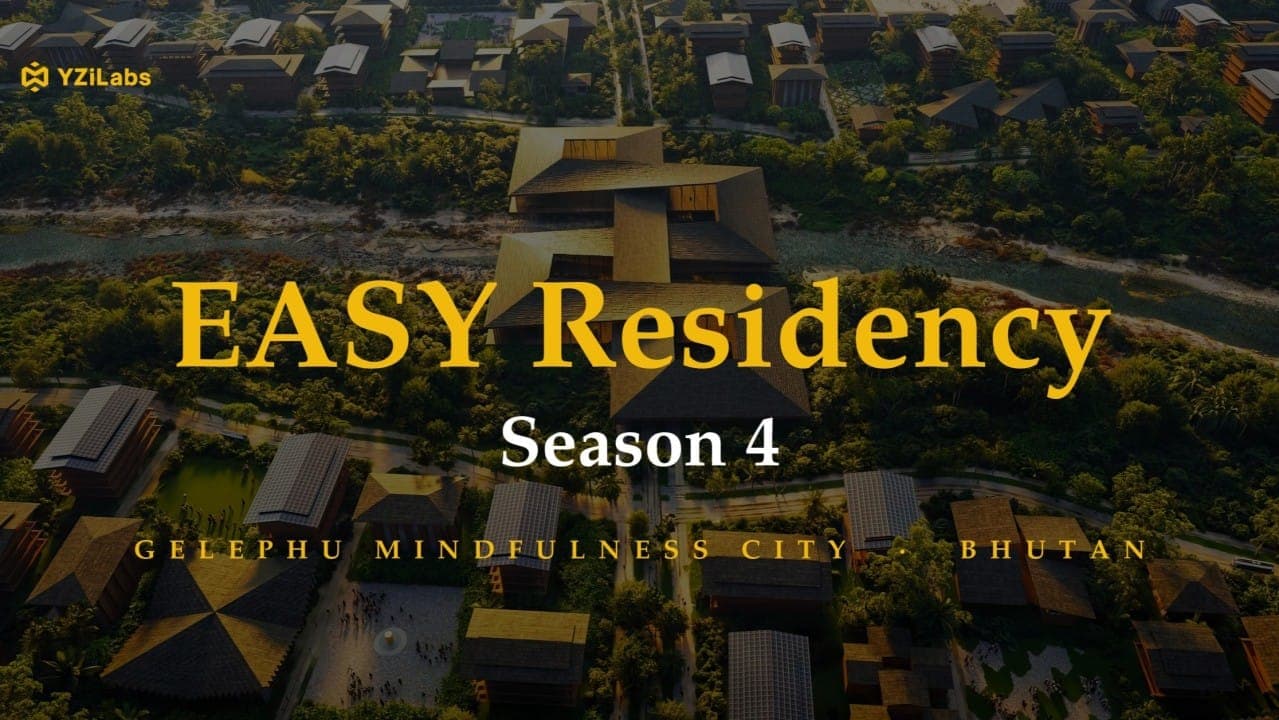
NODE_INTEL::apply-to
SYSTEM_STABLE
Apply to EASY Residency S4 — Build Inside Bhutan's New Sovereign Tech City - YZi Labs Blog
Start 5 weeks from anywhere. Finish 5 weeks in Bhutan. One cohort unlike any before. Main takeaways: • Season 4 of EASY Residency is a 10-week founder program — 5 weeks online + 5 weeks in person — running the second half on the ground inside Bhutan, including Gelephu Mindfulness City (GMC), a newly chartered Special Administrative Region built for blockchain, AI, and frontier tech. • Accommodation, meals, and workspace in Bhutan are fully covered. Founders just bring the work. • Priority s
PROTOCOL_REGION
Global
EXPIRY_SEQUENCE
ROLLING_CYCLE
Incubator
VIEW_DETAILS 
NODE_INTEL::genesis-
SYSTEM_STABLE
Genesis AI Startup Competition | SuperAI 2026 Singapore
The world’s most promising AI startups will go head-to-head at SuperAI Genesis, 10-11 June 2026 in Singapore.
PROTOCOL_REGION
Global
EXPIRY_SEQUENCE
ROLLING_CYCLE
Entrepreneurship
VIEW_DETAILS 
NODE_INTEL::9f3bec8b
SYSTEM_STABLE
AWS Activate
Up to $100,000 in AWS credits for eligible startups. Access compute, storage, AI/ML services, and technical support to build and scale your product on AWS infrastructure.
PROTOCOL_REGION
Global
EXPIRY_SEQUENCE
ROLLING_CYCLE
Startup Program
VIEW_DETAILS NODE_INTEL::239a7f09
SYSTEM_STABLE
Google for Startups Cloud Program
Up to $200,000 in Google Cloud credits over 2 years, plus technical support, mentorship, and access to Google's global startup network.
PROTOCOL_REGION
Global
EXPIRY_SEQUENCE
ROLLING_CYCLE
Startup Program
VIEW_DETAILS NODE_INTEL::63787fbf
SYSTEM_STABLE
Microsoft for Startups Founders Hub
Up to $150,000 in Azure credits plus GitHub, Microsoft 365, LinkedIn, and OpenAI API access — free for startups at any stage.
PROTOCOL_REGION
Global
EXPIRY_SEQUENCE
ROLLING_CYCLE
Startup Program
VIEW_DETAILS NODE_INTEL::057961e2
SYSTEM_STABLE
OpenAI Startup Fund
$1M in OpenAI API credits for startups building transformative AI applications, plus access to the OpenAI team and network.
PROTOCOL_REGION
Global
EXPIRY_SEQUENCE
ROLLING_CYCLE
Startup Program
VIEW_DETAILS NODE_INTEL::c4011a46
SYSTEM_STABLE
Cloudflare for Startups
Workers, R2 Storage, Stream, and all Cloudflare services free for 12 months — up to $250,000 in value for qualifying startups.
PROTOCOL_REGION
Global
EXPIRY_SEQUENCE
ROLLING_CYCLE
Startup Program
VIEW_DETAILS NODE_INTEL::google-c
SYSTEM_STABLE
Google Cloud for Startups
Up to $350,000 in Google Cloud credits for early-stage startups. Access AI, data analytics, and custom solutions to scale your MVP efficiently.
PROTOCOL_REGION
Global
EXPIRY_SEQUENCE
ROLLING_CYCLE
Startup Program
VIEW_DETAILS NODE_INTEL::aws-acti
SYSTEM_STABLE
AWS Activate Founders
Up to $100,000 in AWS cloud credits for early-stage startups. Get technical support, mentorship, and resources to scale your startup today.
PROTOCOL_REGION
Global
EXPIRY_SEQUENCE
ROLLING_CYCLE
Startup Program
VIEW_DETAILS NODE_INTEL::microsof
SYSTEM_STABLE
Microsoft for Startups Founders Hub
Access up to $150,000 in free Azure credits, AI tools, and expert guidance. Build and scale faster with Microsoft's startup program.
PROTOCOL_REGION
Global
EXPIRY_SEQUENCE
ROLLING_CYCLE
Startup Program
VIEW_DETAILS NODE_INTEL::datadog-
SYSTEM_STABLE
Datadog for Startups
Secure up to $100,000 in Datadog credits for your startup. Get real-time visibility, AI integrations, and quick setup to scale your stack efficiently.
PROTOCOL_REGION
Global
EXPIRY_SEQUENCE
ROLLING_CYCLE
Startup Program
VIEW_DETAILS NODE_INTEL::ramp-par
SYSTEM_STABLE
Ramp Partner Perks
Access over $350,000 in partner rewards with Ramp. Enjoy exclusive discounts on accounting, travel, and insurance to boost your business operations.
PROTOCOL_REGION
Global
EXPIRY_SEQUENCE
ROLLING_CYCLE
Startup Program
VIEW_DETAILS 
NODE_INTEL::apply-to
SYSTEM_STABLE
Apply to Iterative
We encourage you to apply early. We admit (and invest in) companies on a rolling basis so we recommend you apply now.
PROTOCOL_REGION
Global
EXPIRY_SEQUENCE
ROLLING_CYCLE
Venture Capital
VIEW_DETAILS 
NODE_INTEL::ai-grant
SYSTEM_STABLE
AI Grant Accelerator
AI Grant is a startup accelerator and funding initiative focused on investing in early-stage AI product companies and supporting innovation with capital and ecosystem resources
PROTOCOL_REGION
Global
EXPIRY_SEQUENCE
ROLLING_CYCLE
Accelerator
VIEW_DETAILS 
NODE_INTEL::sequoia-
SYSTEM_STABLE
Sequoia Arc
Sequoia Arc is a biannual seed-stage catalyst program that helps pre-seed and seed founders build enduring, category-defining companies through funding, mentorship, community, and company building frameworks.
PROTOCOL_REGION
Global
EXPIRY_SEQUENCE
ROLLING_CYCLE
Accelerator
VIEW_DETAILS NODE_INTEL::sequoia-
SYSTEM_STABLE
Sequoia Open Source Fellowship
An equity-free fellowship by Sequoia Capital supporting leading open source developers around the world.
PROTOCOL_REGION
Global
EXPIRY_SEQUENCE
ROLLING_CYCLE
Fellowship
VIEW_DETAILS 
NODE_INTEL::general-
SYSTEM_STABLE
General Catalyst
Global investment and transformation firm partnering with founders from seed through growth to build resilient, AI-enabled companies.
PROTOCOL_REGION
Global
EXPIRY_SEQUENCE
ROLLING_CYCLE
Grant
VIEW_DETAILS NODE_INTEL::founders
SYSTEM_STABLE
Founders Fund
San Francisco-based venture capital firm backing companies building revolutionary technologies.
PROTOCOL_REGION
Global
EXPIRY_SEQUENCE
ROLLING_CYCLE
Grant
VIEW_DETAILS NODE_INTEL::bessemer
SYSTEM_STABLE
Bessemer Venture Partners (BVP)
Global multi-stage venture capital firm with a long history of backing enterprise, consumer and healthcare companies.
PROTOCOL_REGION
Global
EXPIRY_SEQUENCE
ROLLING_CYCLE
Grant
VIEW_DETAILS 
NODE_INTEL::spark-ca
SYSTEM_STABLE
Spark Capital
Multi-stage venture capital firm investing in products and founders across consumer, enterprise, infra, gaming, fintech and AI.
PROTOCOL_REGION
Global
EXPIRY_SEQUENCE
ROLLING_CYCLE
Grant
VIEW_DETAILS 
NODE_INTEL::antler-2
SYSTEM_STABLE
Antler
Global early-stage investor providing $200–$250K for ~8–9% equity in a 6-week residency.
PROTOCOL_REGION
Global
EXPIRY_SEQUENCE
ROLLING_CYCLE
Accelerator
VIEW_DETAILS 
NODE_INTEL::khosla-v
SYSTEM_STABLE
Khosla Ventures
Early-stage and growth venture capital firm founded by Vinod Khosla, investing in ambitious technology companies across enterprise, consumer, health, sustainability and frontier tech.
PROTOCOL_REGION
Global
EXPIRY_SEQUENCE
ROLLING_CYCLE
Grant
VIEW_DETAILS 
NODE_INTEL::hummingb
SYSTEM_STABLE
Hummingbird VC
Global seed investors backing outlier founders across deep tech, AI, SaaS, fintech and healthcare.
PROTOCOL_REGION
Global
EXPIRY_SEQUENCE
ROLLING_CYCLE
Grant
VIEW_DETAILS 
NODE_INTEL::cloudfla
SYSTEM_STABLE
Cloudflare for Startups
Cloudflare for Startups is a startup support program that offers service credits, tooling, and ecosystem benefits to early-stage companies building software and SaaS products. Cloudflare credits help startups scale securely and efficiently while reducing infrastructure costs.
PROTOCOL_REGION
Global
EXPIRY_SEQUENCE
ROLLING_CYCLE
Grant
VIEW_DETAILS