
Hardware Opportunities in Global_DIRECTORY10_PROGRAMS
HARDWARE
Discover hardware opportunities available in Global.
SYSTEM_OVERVIEW
Find the best tech opportunities for hardware.
CORE_BENEFITS
- Access to curated opportunities
- Up-to-date deadline information
- Easy application process
ACCESS_STATUS
PUBLIC_RECORDS_OPEN
LIVE_NODE_TRANSMISSION
NODE_INTEL::apply-to
SYSTEM_STABLE
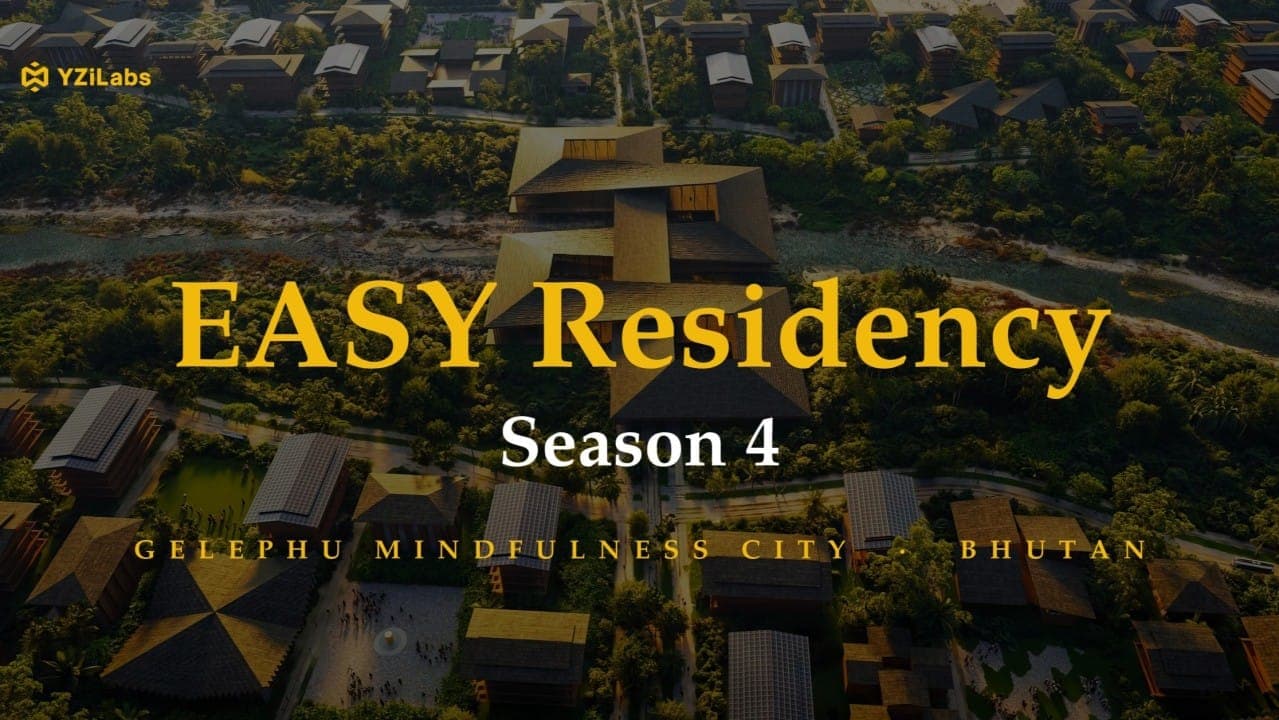
Apply to EASY Residency S4 — Build Inside Bhutan's New Sovereign Tech City - YZi Labs Blog
Start 5 weeks from anywhere. Finish 5 weeks in Bhutan. One cohort unlike any before. Main takeaways: • Season 4 of EASY Residency is a 10-week founder program — 5 weeks online + 5 weeks in person — running the second half on the ground inside Bhutan, including Gelephu Mindfulness City (GMC), a newly chartered Special Administrative Region built for blockchain, AI, and frontier tech. • Accommodation, meals, and workspace in Bhutan are fully covered. Founders just bring the work. • Priority s
PROTOCOL_REGION
Global
EXPIRY_SEQUENCE
ROLLING_CYCLE
Incubator
VIEW_DETAILS 
NODE_INTEL::arm-deve
SYSTEM_STABLE
Arm Developer Program | Build AI at Scale on Arm | Arm Developer
Build, optimise, and scale AI on Arm. Get a personalised dashboard, sandbox access, early tools, Coursera certifications, and direct support from Arm experts.
PROTOCOL_REGION
Global
EXPIRY_SEQUENCE
ROLLING_CYCLE
Developer Program
VIEW_DETAILS NODES_IDENTIFIED: 10
FILTER_RANK:
NODE_INTEL::develope
PRIORITY_OMEGA
Developer relations - Wikipedia
Developer relations, abbreviated as DevRel, is an umbrella term for practices employed by an organization that builds developer-facing software to connect with the developers that use that software. Developer relations is a form of platform evangelism and the activities involved are sometimes referred to as a developer program or a DevRel program. DevRel programs often include the following: [...] • Developer marketing: Outreach and engagement activities to create awareness and encourage developers to use a product. • Developer education: Product documentation and resources such as videos to aid learning a product. • Developer experience: Often referred to as "zeroth customer" and "friction logging", devrel programs include using the product directly, finding problems, and improving the developer experience. [...] • Developer success: Activities to nurture and retain developers as they build and scale with a product. • Community: Events, forums, and social groups around the product. [...] following decades many companies formed DevRel programs. In the 2010s companies like New Relic, Twilio, EngineYard, and SendGrid branded DevRel programs as a " Developer-First approach". [...] DevRel theoretically intersects engineering, marketing, product management, and community management. [...] • Developer Advocates (aka Developer Evangelists): Focus [...] evangelizing) [...] , building webinars, hosting [...] issues with the product [...] software developers' [...] advocacy of tools [...] , and platforms. [...] solving real-world problems by [...] solutions to help developers improve their workflows and increase development efficiency. [...] also facilitate developer advocacy [...] empowering and evangelizing developers [...] champion a target product [...] Organizations which practice DevRel may be Developer-first or Developer-plus (aka Dev +) depending on their primary business model. Developer-First companies (e.g., Stripe, Camunda, PerceptiLabs, Unity, and Twilio) have a business-to-developer model (B2D) focused on selling products specifically designed to be used by developers. Developer-Plus companies (e.g., Slack, Spotify, Apple, Qualcomm, and Santander) tend to be business-to-business(B2B) or business-to-consumer(B2C). While the primary focus of Developer-Plus companies is to create and sell products for businesses or consumers, they also make products or services available to developers which benefit or enhance their strategy including: opening new market channels, creating new use cases, contributing to innovation strategies, or optimizing/enhancing existing products. [...] In 2021, a survey showed that 63.6% of organizations with DevRel programs were Developer-Plus, [...] 36.4% were Developer-First. [...] Regardless of Developer- [...] or Developer-First, companies are recognizing the growing power developers have in influencing purchasing decisions. This includes new companies focused on making tools for developers, and existing companies whose primary focus was elsewhere, which are now recognizing the developer opportunity. Thus, business leaders are now involved in starting new DevRel programs at their companies or increasing the impact of their existing programs. [...] Twilio, is an example of a Developer-First company, and more specifically an API-first company, that helped to shape the API economy (business models and practices designed around APIs), popularize DevRel programs, and became known for platform evangelism. Notably, their three-word billboard in Silicon Valley that simply said: "Ask Your Developer", followed by the Twilio logo, is credited with having started conversations between executives and developers in strategic decision making. [...] companies practicing DevRel globally were [...] North America (Canada and the US – 61.5%) and Europe (Eastern Europe, Western Europe, and the UK – 2 [...] %). Other countries/regions include Australia/New Zealand, China, India, and the
PROTOCOL_REGION
Global
EXPIRY_SEQUENCE
STALE_NODE
Developer Program
VIEW_DETAILS 
NODE_INTEL::nsf-26-5
PRIORITY_OMEGA
NSF 26-506: Pathways to Enable Secure Open-Source Ecosystems (PESOSE) | NSF - U.S. National Science Foundation
The Pathways to Enable Secure Open-Source Ecosystems (PESOSE) program supports the translation of open-source science and engineering-focused research products into safe and sustainable ecosystems that address national and societal challenges. Open-source tools such as software, hardware, machine learning models, languages, and data platforms are designed to be shared as they are publicly-accessible and modifiable. These tools spark innovation in critical fields as varied as artificial intelligence (AI) and cloud computing, banking, healthcare, research, education, next-gen manufacturing, mobility, and National security (including cybersecurity). [...] proposals, allowing teams to propose [...] on a robust [...] Anticipated Type of Award: Standard Grant or Continuing Grant [...] Anticipated Funding Amount: $40,000,000 [...] • For proposals submitted via Research.gov, PAPPG guidelines apply. [...] • For proposals submitted via Grants.gov, NSF Grants.gov Application Guide guidelines apply. [...] • are released as open-source products. These products are freely available for anyone to view, use, modify, or share. Open-source products encourage collaboration, transparency, and community-driven development, which helps speed up innovation. Over time, many of these products become part of [...] national infrastructure, including energy grids, water systems, [...] records, financial networks, and [...] The economic value of open-source products is enormous, with recent estimates exceeding $13 trillion per year. Open-source software is used almost everywhere and supports key technologies such as artificial intelligence, data science, cloud computing, telecommunications, scientific research tools, and critical facilities. Despite these benefits, the number of open-source developers is relatively small, and many projects lack sufficient resources. This can slow innovation and make maintenance difficult. In addition, weaknesses in open-source software - such as security flaws, supply-chain risks, or insider threats - can spread across many connected systems. In extreme cases, these weaknesses could lead to large-scale failures that affect national or global systems. [...] The PESOSE program supports NSF's mission by accelerating innovation that benefits the Nation. Funded projects lower barriers for researchers and startups, protect public and private investments, strengthen safety, security, and privacy, and support interoperability and standards. Together, these outcomes help increase U.S. competitiveness in the global economy. [...] The Pathways to Enable Secure Open-Source Ecosystems (PESOSE) program, managed by the Directorate for Technology, Innovation and Partnerships, creates a new pathway to turn research into innovation by supporting strong, sustainable, and secure open-source ecosystems (OSEs). These ecosystems are built around existing open-source products, tools, and artifacts that already show promise. The goal is to transform research results into widely used technologies and services that benefit society. Open-source ecosystems depend on distributed development, where contributors from many organizations work together to improve and maintain the product. When successful, these ecosystems grow active communities of developers and users, attract resources, and help innovations make a lasting impact. [...] Track 1: Scoping and planning. This track helps organizations that need experience building developer and user communities. This includes planning and training in governance, legal issues, licensing, fundraising, and administration. [...] Anticipated Type of Award: Continuing Grant or Standard Grant [...] Full Proposal Preparation Instructions: Proposers may opt to submit proposals in response to this Program Solicitation via Research.gov or Grants.gov. [...] You can submit proposals in response to this solicitation through Research.gov or Grants.gov, unless otherwise noted.
PROTOCOL_REGION
Global
EXPIRY_SEQUENCE
STALE_NODE
Grant
VIEW_DETAILS NODE_INTEL::microsof
PRIORITY_OMEGA
Microsoft Build AI
Microsoft Build AI [...] 5 May – 30 Jun 2026 [...] ₹6,00,000 Prize Pool [...] Microsoft Build AI is grounded in a simple belief: meaningful innovation comes from builders who take on tough challenges and deliver real, working solutions.Across six dynamic tracks, you’ll solve complex, real-world problems spanning productivity, security, agentic systems, and beyond. This is not just about ideation - it’s about execution, impact, and building what truly works. [...] Who Can Participate [...] • Professionals with 3+ years of work experience • Participate individually or in teams of up to 3 members • One submission per team • Participants can be part of only one team [...] 6 Challenge Tracks [...] Theme 06 - PRODUCTION FUNCTION [...] Win incredible prizes and opportunities to showcase your innovation to the world. Total ₹600,000 in prizes to be won! [...] Timelines & Milestones [...] 5 May 2026 [...] Registration Opens [...] Sign up on HackerEarth. Form your team (1–3 members). [...] 5 May – 7 June 2026 [...] Ideation & Building [...] Attend workshops, build your MVP, and iterate on your solution. [...] 8 – 18 June 2026 [...] Evaluation Period [...] Submissions are reviewed and [...] 19 June 2026 [...] Top Finalists Announced [...] Shortlisted teams are announced and begin preparing for the finale. [...] Late June 2026 [...] Grand Finale [...] Top teams pitch live. Winners crowned and prizes awarded. [...] Your submission must include the following deliverables. Ensure all materials meet the format requirements below. [...] Project Deck (PDF) [...] Format: PDF only, max 10 slides. Must include: problem statement, solution overview, architecture diagram, AI integration details, demo screenshots, and team introduction. File size limit: 20 MB. File name: [...] : a live walkthrough of the working prototype, not a slideshow. [...] GitHub Repository [...] Must be a public repository. Include a comprehensive README.md (max 3 pages equivalent) with: project description, setup instructions, dependencies, architecture overview, AI tools used, and team member details with roles. [...] Prototype / Live Link [...] Provide a working URL or deployment link where judges can interact with your solution. If login is required, provide test credentials. Must be accessible for at least 30 days after submission deadline. [...] Projects are scored across 6 dimensions. Weights indicate relative importance (total: 100). [...] Sessions & Workshops [...] Expert-led sessions to accelerate your hackathon journey. [...] • All projects must be started and substantially built during the hackathon period (5 May - 30 June 2026). Pre-existing projects or prior submissions to other hackathons are not permitted. [...] • All solutions must leverage the Microsoft AI stack (Azure AI, Foundry, GitHub Copilot, AI/ML, Power Platform, etc.). [...] • Submissions must be made before the stated deadline. Late entries will not be accepted under any circumstances. [...] • Each submission must include a clear README with project description, setup instructions, dependencies, and team member details. [...] • All code must be submitted via a public GitHub repository accessible to judges. [...] • Use of AI-powered coding assistants (e.g., GitHub Copilot) and generative AI tools is permitted and encouraged. [...] Who can participate in the hackathon? [...] This is a team-based hackathon. You can participate individually or form a team of up to 3 members. [...] When does the hackathon start and end? [...] The hackathon begins on May 05, 2026 at 06:00 PM IST and ends on June 07, 2026 at 11:59 PM IST. All development must take place within this timeline. [...] Is this an online or offline hackathon? [...] This is a fully online hackathon, so you can participate from anywhere. [...] What should I build for the hackathon? [...] There are 6 themes provided. Your submission must align with one of these themes.
PROTOCOL_REGION
Global
EXPIRY_SEQUENCE
STALE_NODE
Competition
VIEW_DETAILS 
NODE_INTEL::open-sou
PRIORITY_OMEGA
Open Source for the Life Sciences - Open Source for Science Fund
The Open Source for Science Fund invites letters of intent from developers and maintainers of open source software projects that underpin AI and data-intensive research in the life sciences. This program will fund technical advances and address significant bottlenecks in software tools with demonstrated community adoption in the life sciences, allowing them to unlock new capabilities for scientists worldwide and evolve functionality to meet the demands of AI-native research environments. [...] Open Source for Science Fund is [...] multi-donor initiative [...] Renaissance Philanthropy [...] philanthropic and industry [...] sustain and evolve [...] scientific software for the AI era. With seed funding from Biohub [...] Wellcome, and support from [...] builds on the track record [...] for Science ( [...] ) program — six cycles, [...] deployed across 230+ projects — as a successor initiative that is operationally independent and purpose [...] built to scale. [...] “Open Source for the Life Sciences” (OS4LS) is the inaugural call of the Open Source for Science Fund. It is targeted at open source software that underpins data-intensive research and AI-driven discovery in the life sciences. [...] serves critical needs for a research audience, a realistic plan of work [...] with the project’s own roadmap [...] and genuine buy-in from [...] maintainer community about [...] For this Request for Applications, we seek to support domain-specific software tools across a broad range of [...] life sciences. We also welcome proposals focused on foundational libraries and software dependencies as well as collaborations among related projects within the same software ecosystem. [...] Available funding: Up to $250,000 USD total over two years (up to $125,000 USD/year) [...] Available funding: Up to $1,000,000 USD total over two years (up to $500,000 USD/year) [...] • Open source libraries that serve as core dependencies of scientific applications across multiple domains in [...] life sciences, OR [...] developing shared interoper [...] , or common [...] and capabilities across [...] set of related [...] within the same [...] Applications in this track may propose coordinated work spanning multiple [...] For both tracks, grants will be awarded for two years (24 months). Proposals will be evaluated for appropriateness of budget relative to the scope of work proposed. Indirect costs may not exceed 10% of direct costs and should be included in the maximum funding for each track. A detailed budget is not required at the LOI stage. [...] for staff (full-time, part-time, [...] contract): developers, contributors, [...] writers, community managers, [...] • Projects applying for funding must be open licensed and have a publicly available codebase in a repository. Proprietary software or software with custom / restrictive licenses is not eligible for funding. [...] • The software project(s) must have a mature codebase and demonstrated traction and adoption in the life sciences. Early-stage prototypes or planned software projects lacking evidence of adoption are not in scope for this call and unlikely to pass the LOI stage. [...] This is a two-step process: an initial Letter of Intent (LOI), followed by invitations to a select number of applicants to submit a Full Application. The application form will be available on May 11 at 9am Pacific Time at https://os4science.org/funding%5Fopportunity/os4ls/. [...] Date Milestone --- --- May 4, 2026 Website launch; RFA announced May 11, 2026 LOI Application portal opens (9 am PDT / 4 pm UTC) June 8, 2026 Letters of Intent due (2 pm PDT / 9 pm UTC) June 23, 2026 Notification of invitation to submit Full Applications; Full Application portal opens (9 am PDT / 4 pm UTC) July 21, 2026 Full Applications due (2 pm PDT / 9 pm UTC) October 2026 Earliest notification of decisions December 1, 2026 Earliest project start date
PROTOCOL_REGION
Global
EXPIRY_SEQUENCE
STALE_NODE
Grant
VIEW_DETAILS 
NODE_INTEL::build-on
PRIORITY_OMEGA
Build on Trainium: Kernels for ML Acceleration call for proposals — Spring 2026 - Amazon Science
Building the future of AI with AWS Trainium
PROTOCOL_REGION
Global
EXPIRY_SEQUENCE
STALE_NODE
Grant
VIEW_DETAILS NODE_INTEL::aws-agen
PRIORITY_OMEGA
AWS Agentic AI call for proposals — Spring 2026 - Amazon Science
Advancing the frontiers of AI.
PROTOCOL_REGION
Global
EXPIRY_SEQUENCE
STALE_NODE
Research Program
VIEW_DETAILS 
NODE_INTEL::northern
PRIORITY_OMEGA
Northern Light – maria.io
The first accelerator that combines market access with founder resilience — helping international startups land, validate, and expand in Finland and Europe. [...] Apply for the Autumn 2026 Batch [...] The Northern Light accelerator delivers hands-on support to validate your product with real customers, navigate sales in local and EU markets, and secure traction alongside revenue. We also prioritise founder resilience to keep your team focused and execution-ready [...] faster market entry, [...] Startups – spring 2026 [...] The second cohort brings together founders from Brazil, Japan, Argentina, Australia, India, the UK, Singapore, Cameroon, South Africa, Turkey, Ireland, and Iran. Meet the inspiring startups of the spring 2026 batch! [...] Our 3-month accelerator program is designed for non-Finnish founders or teams ready to build in Europe, starting from Helsinki. We provide a physical base at Maria 01, enabling you to join our vibrant community. [...] There is a participation fee for the Northern Light Accelerator of €2,000 (incl. VAT) per startup (up to two founders). This includes not only the full program, its activities, and support package valued at €120,000, but also a dedicated desk space at Maria 01 for three months with full access to all campus services and facilities, as well as a startup ticket to Slush 2026 for the Autumn Batch – all delivered equity-free. [...] Current program and application period [...] The third batch of our program will take place in Autumn 2026, starting on August 21st and finishing on November 20th. The application period is open from the 16th of April until June 6, 2026. Please note, that we review applications continuously and the spots are limited, that is why we encourage you to apply early. We expect to make all decisions on successful applicants by early the end of June 2026, to allow all the accepted participants enough time to prepare for their travel to Helsinki. [...] APPLY – Application period opens [...] Northern Light is for early-stage international startups looking to enter the European market through Finland. You should have a company registered in some country. Additionally, you should also have at least an MVP or early traction and be committed to scaling your business in Europe. You can also apply if you are already in Finland and have at least one non-Finnish co-founder or team member. [...] 11. When can I apply for the program? [...] We run two accelerator programs each year, each with a dedicated application period. Check this website for the current application dates. If no application period is open at the moment, you can sign up for our mailing list below to stay informed about when the next application window opens. [...] Startups – autumn 2025 [...] The first-ever program brought together founders from India, the Philippines, Norway, the USA, Ireland, Kenya, Spain and Finland. Meet the inspiring startups of the autumn 2025 batch! [...] Apply for Autumn 2026 Batch.
PROTOCOL_REGION
Global
EXPIRY_SEQUENCE
STALE_NODE
Accelerator
VIEW_DETAILS 
NODE_INTEL::android-
PRIORITY_OMEGA
Android XR Catalyst | Android Developers
Android XR Developer Catalyst Program [...] The Android XR Developer Catalyst Program is designed to empower developers like you. Whether you're an established studio or an independent developer, the program provides the resources, hardware, and funding needed to build and scale innovative experiences across wired XR glasses, like XREAL's Project Aura, and intelligent eyewear (audio and display glasses). Apply now arrow_forward [...] Applications close June 30, 2026 [...] Program overview [...] The Catalyst Program supports developers building augmented and immersive experiences across core verticals that help users interact with the world in new ways. Media & Entertainmentanimatedimages Gamingstadiacontroller Productivity & Learningmenubook Discovery & Navigationexplore Messaging & Socialforum Health & Wellnessecgheart Commerce & Paymentscredit_card [...] Get early access to hardware development kits for wired XR glasses (XREAL's Project Aura), audio glasses, or display glasses. Technical Resources [...] Gain access to specialized technical resources and support channels to help you build and prepare your app for Google Play. Grant Opportunities [...] Submit a request and you may be eligible to receive a non-recoupable grant to accelerate your development. XREAL's Project Aura Intelligent eyewear Eligibility & Timeline [...] We welcome applications from developers looking to publish apps in the Android XR ecosystem in the next 6-12 months. May 19, 2026 [...] Applications Open [...] June 30, 2026 [...] Application Close [...] Please submit your application by June 30th by 11:59 PM PDT. July 15, 2026 [...] Applicants will receive notification decisions no later than July 15, 2026. See What's Possible [...] You retain full ownership of your Intellectual Property. The program is designed to support your development and help you scale your own unique solutions within the Android XR ecosystem. [...] Once the application window closes, all submissions undergo a multi-stage review process. You will be notified of your selection status via email no later than July 15, 2026. Selected participants will then move into the onboarding phase, which includes signing program agreements and receiving development kits. [...] Applications are reviewed by a cross-functional team at Google. Projects are evaluated based on several factors, including, but not limited to, vertical alignment, developer readiness, and a clear articulation of funding requirements. [...] Non-recoupable grants are awarded at different levels based on stated need and availability. Once selected, applicants will be notified of the final award amount and can choose to accept or decline. Funding is awarded based on key development milestones, including, but not limited to, signed agreements, technical design, and publishing in Google Play. [...] To get started with technical guides, API documentation, and design best practices, visit the Android XR developer site. [...] At this time, development kits can only be shipped to developers located in the United States, Japan, the United Kingdom, and the European Union. Please ensure your shipping address falls within one of these supported regions before submitting your application. Ready to
PROTOCOL_REGION
Global
EXPIRY_SEQUENCE
STALE_NODE
Developer Program
VIEW_DETAILS NODE_INTEL::apply-to
SYSTEM_STABLE
Apply to EASY Residency S4 — Build Inside Bhutan's New Sovereign Tech City - YZi Labs Blog
Start 5 weeks from anywhere. Finish 5 weeks in Bhutan. One cohort unlike any before. Main takeaways: • Season 4 of EASY Residency is a 10-week founder program — 5 weeks online + 5 weeks in person — running the second half on the ground inside Bhutan, including Gelephu Mindfulness City (GMC), a newly chartered Special Administrative Region built for blockchain, AI, and frontier tech. • Accommodation, meals, and workspace in Bhutan are fully covered. Founders just bring the work. • Priority s
PROTOCOL_REGION
Global
EXPIRY_SEQUENCE
ROLLING_CYCLE
Incubator
VIEW_DETAILS NODE_INTEL::arm-deve
SYSTEM_STABLE
Arm Developer Program | Build AI at Scale on Arm | Arm Developer
Build, optimise, and scale AI on Arm. Get a personalised dashboard, sandbox access, early tools, Coursera certifications, and direct support from Arm experts.
PROTOCOL_REGION
Global
EXPIRY_SEQUENCE
ROLLING_CYCLE
Developer Program
VIEW_DETAILS